
Behavioural Optometry - seeing BEYOND sight
Behavioural Optometry looks at how vision problems might be holding someone back in school or everyday tasks.What is Behavioural Optometry?
Behavioural Optometry is a specialised field of Optometry which focuses on how the visual system (eyes and brain) functions and interacts with the rest of the body and the environment. Assessments look beyond levels of vision commonly assessed on the test chart during a routine eye examination and look further into how vision is interconnected with movement and learning

Over 80% of learning is visual. Even subtle inefficiencies in how we process visual information can affect academic performance, productivity, and quality of life. Behavioural Optometry helps unlock that potential by treating vision as a dynamic system—not just a static measurement.
Behavioural Optometry is a progressive approach to vision care that goes far deeper than simply checking how clearly you see. It explores how your brain interprets visual information—how you process, respond to, and interact with the world through your eyes.
Your assessment
This involves a comprehensive assessment of how the eyes work together at all distance (binocular vision), how well they can focus (accommodation), how well the eyes can move and follow a target or search for information, and how information is processed to extract meaning.
Assessments include how well we can locate things in the environment or space around us, understand where we are in relation to these things and how to efficiently use vision to help us navigate the world.
The outcome of the initial assessment will determine what happens next. Recommendations may include, Visual Processing Assessment, Vision Therapy, Colorimetry, no further action required or onward referral.

The initial stages of visual assessment
1: Questionnaire
Complete our online initial questionnaire, so we have the full background and symptoms. Here is a link to the online questionnaire
2: Eye Examination
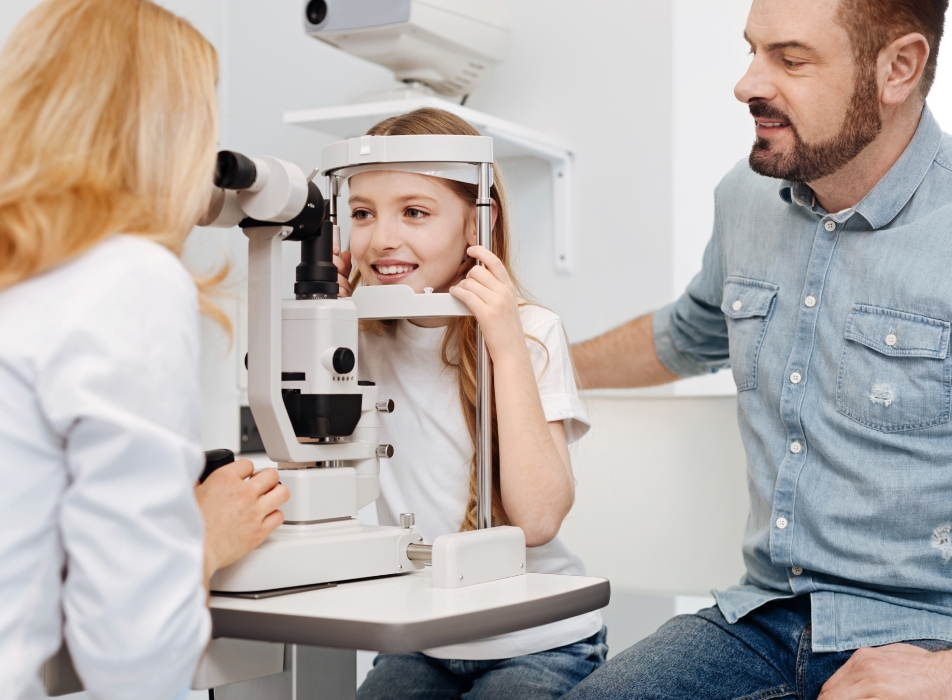
This will look at refractive error and check the general health of the eye and rule these out as being the cause of the symptoms, before going down the route of Behavioural Optometry
3: Comprehensive Binocular Vision assessment
In this evaluation. we take a detailed history of any difficulties, evaluate the functional abilities of the eyes and carry out a comprehensive assessment of how the eyes focus and move together. A detailed report is then provided with the recommended treatment programme, which may include Visual Processing analysis, Vision Therapy, Colorimetry or onward referral if necessary.
Visual Processing Analysis
This looks at how the individual process the visual information detected in their environment and how quickly and accurately is the information processed. Some of the skills assessed are:
- Visual discrimination – the ability to discriminate the features of objects
- Visual figure-ground – the ability to identify an object within a complex background
- Visual Closure – the ability to identify a form or image when only some of the details or part of the image is visible
- Visual memory and visualisation – the ability to reorganize and recall visually presented information
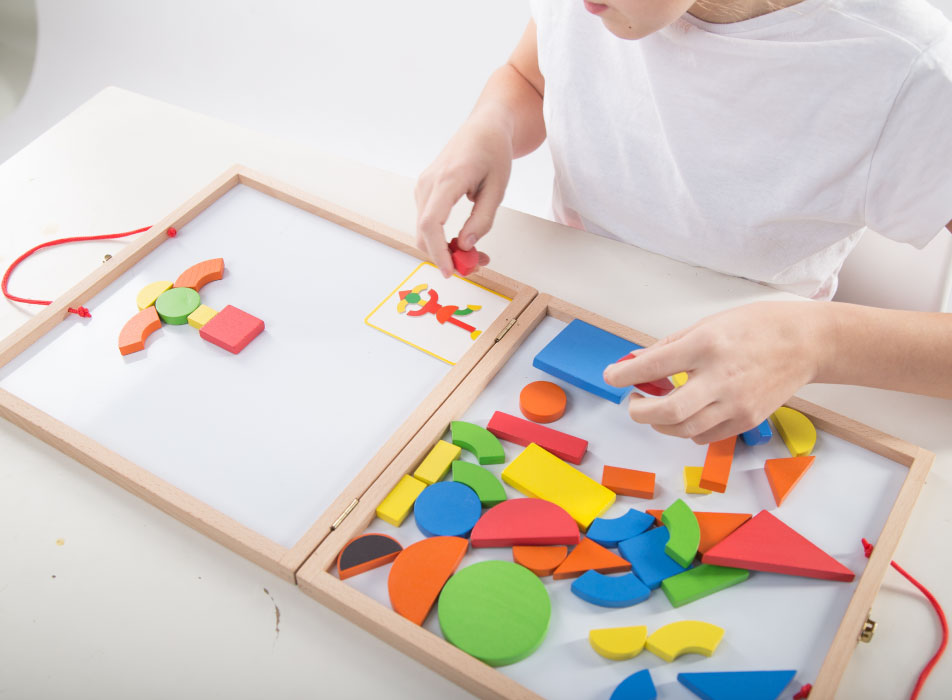

Vision Therapy
Vision therapy aims to help you becomes more aware of your relationship to the visual world, enabling you to extract a greater amount of information in a more efficient and automatic way. It can:
- Improve real world visual skills such as reading, and writing
- Help to make visual skills more automatic
- Improve sports skills by improving spatial awareness and reaction times.
- Improve balance and coordination
Vision Therapy is given as a combination of in-house and at home sessions over a period of weeks or months. In some cases computerised vision therapy can be used to reduce visits to the practice.
Coloured overlays and Colorimetry
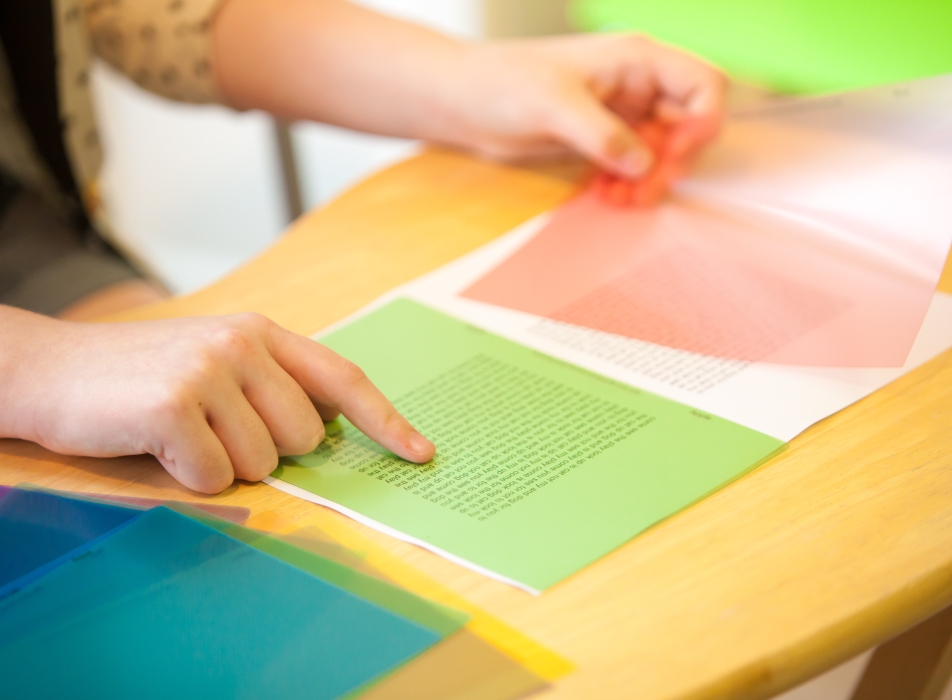
A rate of reading test computer analysis is used to determine the child’s unaided reading ability. A computer program is then used the find the basic colour which alleviates Visual Stress symptoms. The child is then given that chosen coloured overlay and retries the rate of reading test to assess improvement in reading.
Following the successful use of overlays, the patient may then move on to the advanced colorimeter, which picks from 10,000 hues, tints and colours to determine a more accurate and hence more effective colour for the patient. This is then made into spectacles.
Who would benefit from an assessment?
Here are the key signs of Visual Processing or Coordination Challenges. Do you notice any of the following in you or your child?
• Struggles with reading, writing, and copying tasks
• Poor spatial awareness and difficulty with puzzles or patterns
• Clumsiness, poor coordination, and trouble with sports or movement games
• Challenges with drawing, handwriting, and pencil control
• Easily distracted; may report blurry or moving words
These difficulties can be improved in many cases using a personalised program of vision therapy. Vision therapy can improve confidence through improving awareness of how we interact with the environment and practising skills that make improve functioning.
Your assessor and expert in Behavioural Optometry Dr Caroline Wilson PhD BSc MCOptom
Dr Caroline Wilson specialises in diagnosing and treating visual challenges that impact reading and learning, especially in children.
Carolines developed a special interest through her PhD studies, completing a thesis on the assesment and management of children with reading difficulties.
Her assessments uncover hidden barriers by evaluating eye coordination, tracking, and focus.
Caroline’s focus is on helping patients reach their full visual potential.

Behavioural Optometry – your questions answered!
What makes Behavioural Optometry different from regular eye tests?
It looks beyond eyesight to assess how your eyes work together, process information, and support daily tasks like reading, learning, and movement.
Is it only for children or learning difficulties?
Not at all — it benefits anyone with visual stress, fatigue, or performance issues, from students to athletes to professionals.
What does a Behavioural Optometrist actually test?
They assess eye teaming, focusing, tracking, visual processing ability, and how vision links to posture, coordination, and attention.
Will it improve reading or concentration?
Many patients are able to focus better, read more comfortably and function better in their environment — especially children with learning challenges.
Is Vision Therapy part of it?
Often, yes. Tailored exercises retrain the brain-eye connection to improve comfort, clarity, and performance.
Can it help with headaches, stress, screen use or digital fatigue?
Definitely. It identifies underlying visual stress and offers solutions like lens prescriptions, exercises, or ergonomic advice.
It often reduces symptoms like eye strain, headaches, and fatigue caused by poor visual habits or stress.
Key Facts & Stats on Behavioural Optometry
- Over 80% of learning is visual. Vision is the dominant sense in humans, and subtle visual inefficiencies can significantly impact reading, writing, and concentration.
- Behavioural optometry has been practiced for over 70 years. It emerged as a scientific discipline in the mid-20th century and continues to evolve with advances in neuroscience and cognitive science.
- It goes beyond 20/20 vision. Behavioural optometrists assess how the brain interprets visual input — including tracking, focusing, eye teaming, and visual memory — not just clarity of sight.
- Vision therapy can retrain the brain-eye connection. Tailored programs help patients develop new visual skills, often improving reading fluency, attention, and coordination.
- It’s multidisciplinary. Behavioural optometry integrates neurology, psychology, and developmental science to support learning, performance, and wellbeing.
- Clinical evidence is growing. A substantial body of research supports its effectiveness, with new studies emerging from clinicians and academics worldwide.
For more information and further reading:
The British Association of Behavioural Optometrists
Synapsewaves.com article – Understanding Behavioural Optometry

Parents often report sudden boosts in their child’s confidence, teachers notice improved concentration, and adults experience newfound ease when reading or working. Dr Wilson doesn’t just improve vision—she transforms how patients feel about using their eyes.
Find out more?
Book an appointment with Caroline, please complete the online assessment form here and call to book on 01756 792933.